Looking for a Fort Lauderdale neighborhood that feels more residential without giving up easy access to the city’s biggest destinations? Croissant Park stands out for exactly that balance. If you want quiet streets, older homes with character, and a location that keeps downtown, major roadways, and regional travel close at hand, this neighborhood is worth a closer look. Let’s dive in.
Why Croissant Park Stands Out
Croissant Park is part of southwest Fort Lauderdale’s older residential fabric, and its location tells a big part of the story. City survey materials place the area between Tarpon River to the north, State Road 84 to the south, Federal Highway to the east, and Southwest 9th Avenue to the west. The survey also notes that the study area includes a portion of downtown, which helps explain why the neighborhood feels so connected to the urban core.
That combination gives you something many buyers want but do not always find easily. You get a low-rise residential setting with a more established feel, while still staying close to the energy and convenience of central Fort Lauderdale. For buyers who value both calm and access, that balance is a major draw.
A Neighborhood With Real Roots
Croissant Park is not just a name on a map. According to City of Fort Lauderdale historic preservation documents, the neighborhood name dates back to a 1925 replat of the former Placidena development by Gilbert F. Woods, Thomas E. Hoskins, and Joseph P. Young. That early history gives the area a longer timeline than many people expect.
The neighborhood also saw major growth return in the late 1940s and early 1950s. As a result, Croissant Park’s housing story reflects both early platting and postwar development. For you as a buyer, that often translates into a streetscape with a more layered, lived-in character rather than a single-style, single-era feel.
There is also an officially recognized civic association, with the City of Fort Lauderdale listing meetings at the Croissant Park Community Center on West Park Drive. That is a meaningful sign of a neighborhood with a distinct local identity and active community structure.
Croissant Park Housing Character
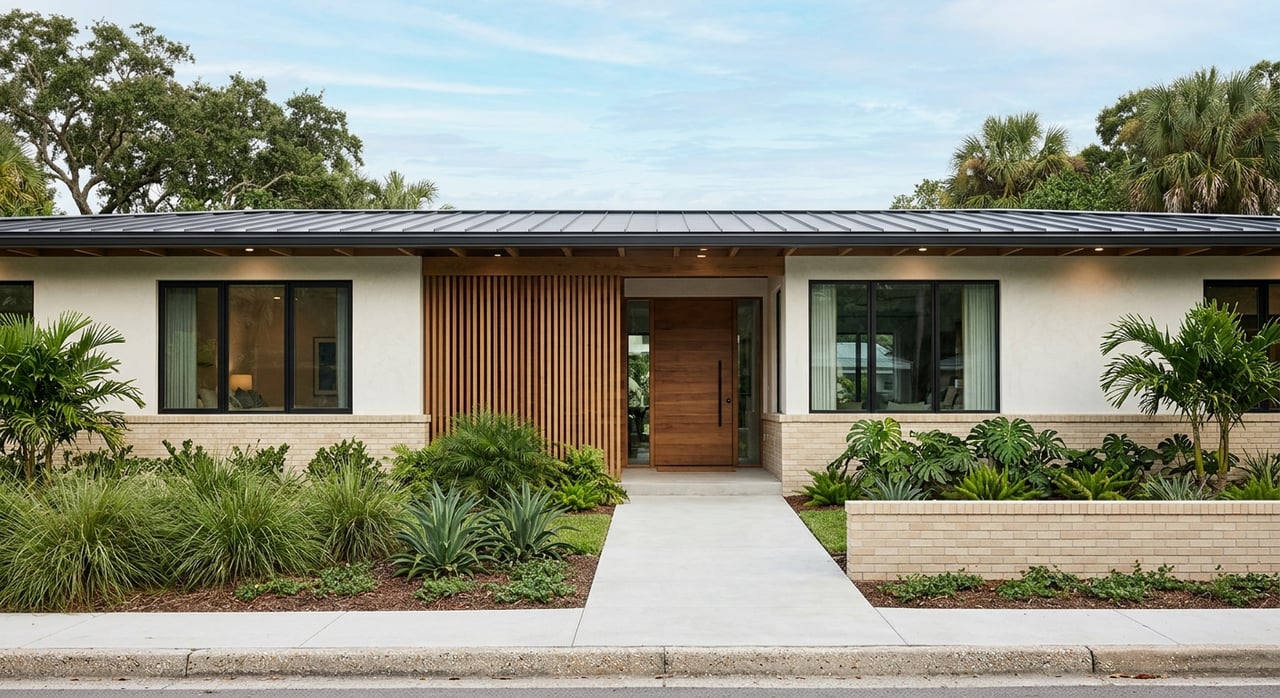
One of the clearest themes in city survey documents is the neighborhood’s low-rise, single-family pattern. In Croissant Park South and West River Croissant Park, homes are described as one-story residences with stucco exteriors, concrete masonry construction, and poured slab foundations. Details such as brick veneer accents, simple columns, small entrance porticos, and wide eaves help define the area’s residential look.
In practical terms, that means many streets in Croissant Park offer a quieter, more traditional residential feel than condo-heavy parts of Fort Lauderdale. If you are searching for an area where detached homes still shape the streetscape, this neighborhood has that appeal.
Common Home Styles
Architecturally, the older fabric is tied to Minimal Traditional, Transitional Ranch, and Mid-Century Modern design. City documents identify Croissant Park South with a 1948 to 1953 period of significance and West River Croissant Park with 1946 to 1958. Those details help explain why many homes here feel modest, functional, and rooted in postwar South Florida design.
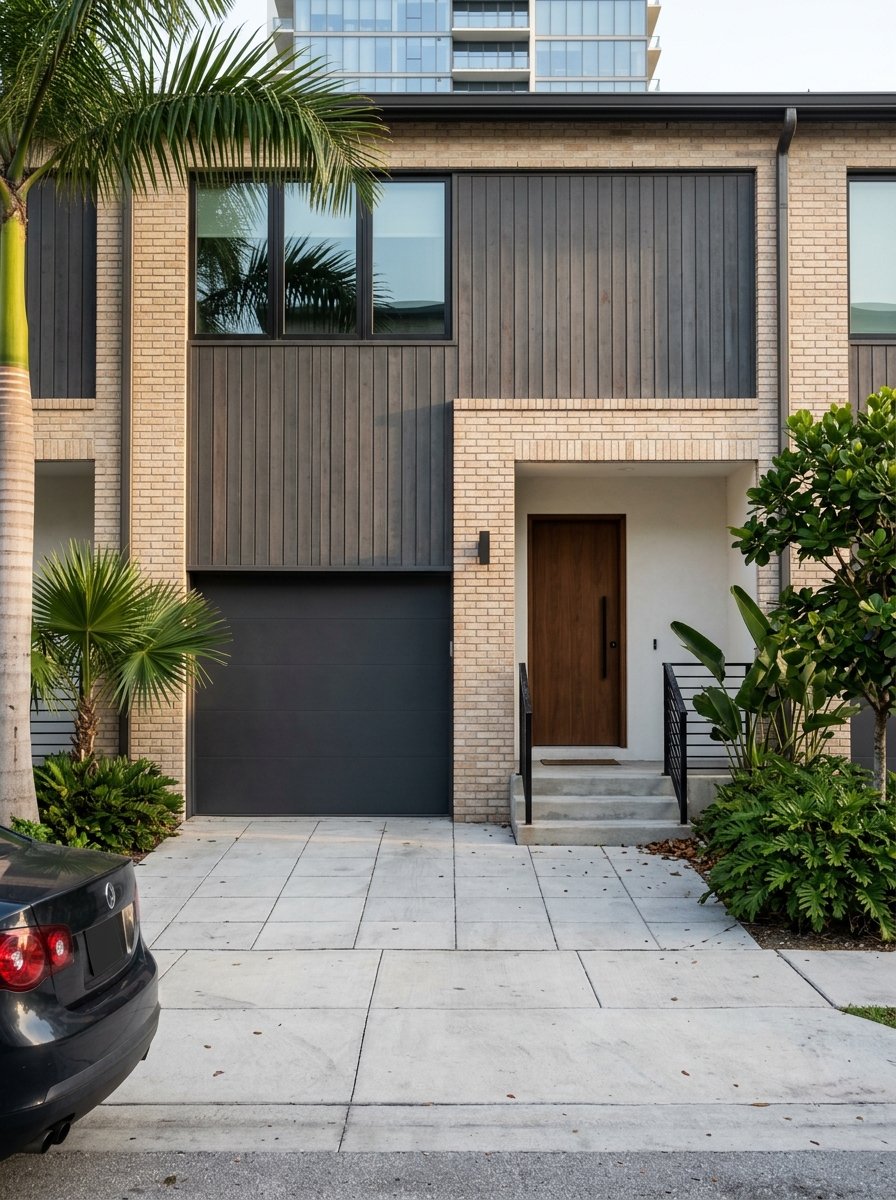
At the same time, the housing mix is not frozen in one era. Current market guides describe remodeled ranch-style homes, Spanish Revival influences, townhouses, duplexes, and some newer construction in the area. That gives today’s buyers a wider range of options, whether you prefer original character, updated interiors, or infill construction.
Older Homes and Evolving Inventory
The City of Fort Lauderdale’s survey documented 24 individual resources in the Croissant Park and Poinciana Park area, along with 3 already designated historic resources. That reinforces the idea that this is a neighborhood with substantial older building stock still in place.
For buyers and sellers, that matters. It suggests Croissant Park is not defined only by new inventory or teardown activity. Instead, it offers a mix of established homes and evolving opportunities, which can be appealing if you want a location with a sense of continuity and room for change.
Parks and Recreation in Daily Life
For many residents, the neighborhood’s biggest public amenity is Croissant Park itself. The City of Fort Lauderdale lists the park at 245 W. Park Dr. as a 16.3-acre facility with athletic fields, a pool, a recreation center, and a water playground. It is open daily from 6 a.m. to 9 p.m., which makes it a meaningful part of everyday neighborhood life.
That kind of amenity can shape how a neighborhood feels. Instead of a simple greenspace, Croissant Park functions more like a recreation hub. Whether you want open space, organized activities, or a nearby place to spend time outdoors, the park adds practical value to the area.
What the Park Offers
The city’s pool information adds more detail, including group lessons, private lessons, locker rooms, and the water playground. Those features make the park more versatile for a wide range of residents and routines.
The city also notes accessibility features at the recreation center and pool area, including a wheelchair-accessible ramp and water wheelchairs. That is an important part of understanding the amenity as a public resource designed to serve more residents comfortably.
Urban Access Without a High-Rise Feel
Croissant Park’s location is one of its biggest lifestyle advantages. Broward County identifies Fort Lauderdale-Hollywood International Airport at 100 Terminal Drive in 33315, with driving directions using I-95, I-595, and U.S. 1/Federal Highway. For residents, that means one of South Florida’s key travel hubs is nearby and well connected.
Port Everglades is another major regional asset close to the neighborhood. The port notes its position near the airport and Florida’s highway system, with entrances via SE 17th Street, I-595 East, and State Road 84 off U.S. 1. If your lifestyle involves business travel, cruises, or frequent regional movement, that access can be a real convenience.
This is why Croissant Park often appeals to buyers who want residential streets without feeling cut off. The neighborhood’s value is not only in the homes themselves. It is also in how easily you can connect to downtown Fort Lauderdale, key transportation corridors, and major destinations across the area.
Who Croissant Park May Appeal To
Croissant Park can make sense for several types of buyers. If you want an established Fort Lauderdale neighborhood with detached homes, local recreation, and practical travel access, it checks a lot of boxes. If you are relocating and want a setting that feels more residential than some denser parts of the city, it deserves a place on your shortlist.
It may also appeal if you are comparing lifestyle tradeoffs. Some buyers prioritize walkable urban intensity, while others want more breathing room at home. Croissant Park offers a middle ground, with suburban-feeling streets and strong access to downtown and regional infrastructure.
What to Notice When Touring Homes
If you are visiting Croissant Park in person, pay attention to the details that shape day-to-day living. Look at the street pattern, lot layout, and how much of the block is made up of one-story homes versus newer infill. Notice whether you are drawn more to original postwar character, renovated interiors, or newer housing types like townhomes and duplexes.
It is also smart to consider how you plan to use the location. For some buyers, proximity to airport and port corridors is a major plus. For others, access to the park, recreation center, and established residential setting may matter more.
Why Location Is the Main Story
In Croissant Park, the headline is simple. You are looking at an older Fort Lauderdale neighborhood with a recognizable identity, a strong public park, and unusually efficient access to the city’s major destinations. That is a compelling combination in a market where many buyers feel pushed to choose between convenience and neighborhood feel.
If you are searching in 33315 and want a residential pocket that stays connected to the wider city, Croissant Park is one to watch closely. Its value comes from the way history, housing character, recreation, and urban access all come together in one place.
If you are considering a move in Fort Lauderdale and want clear, local guidance on neighborhoods like Croissant Park, the E+E group can help you navigate your options with insight and care.
FAQs
Is Croissant Park in Fort Lauderdale mostly single-family homes?
- City survey documents describe the older housing fabric as largely one-story, single-family residential, though today’s market also includes townhomes and duplexes.
What is Croissant Park in 33315 known for?
- Croissant Park is known for its quieter residential streets, older home character, a 16.3-acre namesake park, and convenient access to downtown, major roads, the airport, and Port Everglades.
What amenities does Croissant Park offer residents?
- The neighborhood’s main public amenity is Croissant Park, which includes athletic fields, a pool, a recreation center, and a water playground.
Does Croissant Park feel urban or suburban?
- It is best understood as a low-rise residential pocket with suburban-feeling streets and strong access to urban destinations.
Why do buyers look at Croissant Park in Fort Lauderdale?
- Buyers are often drawn to the mix of established homes, neighborhood recreation, and a location that connects efficiently to downtown Fort Lauderdale and regional travel routes.